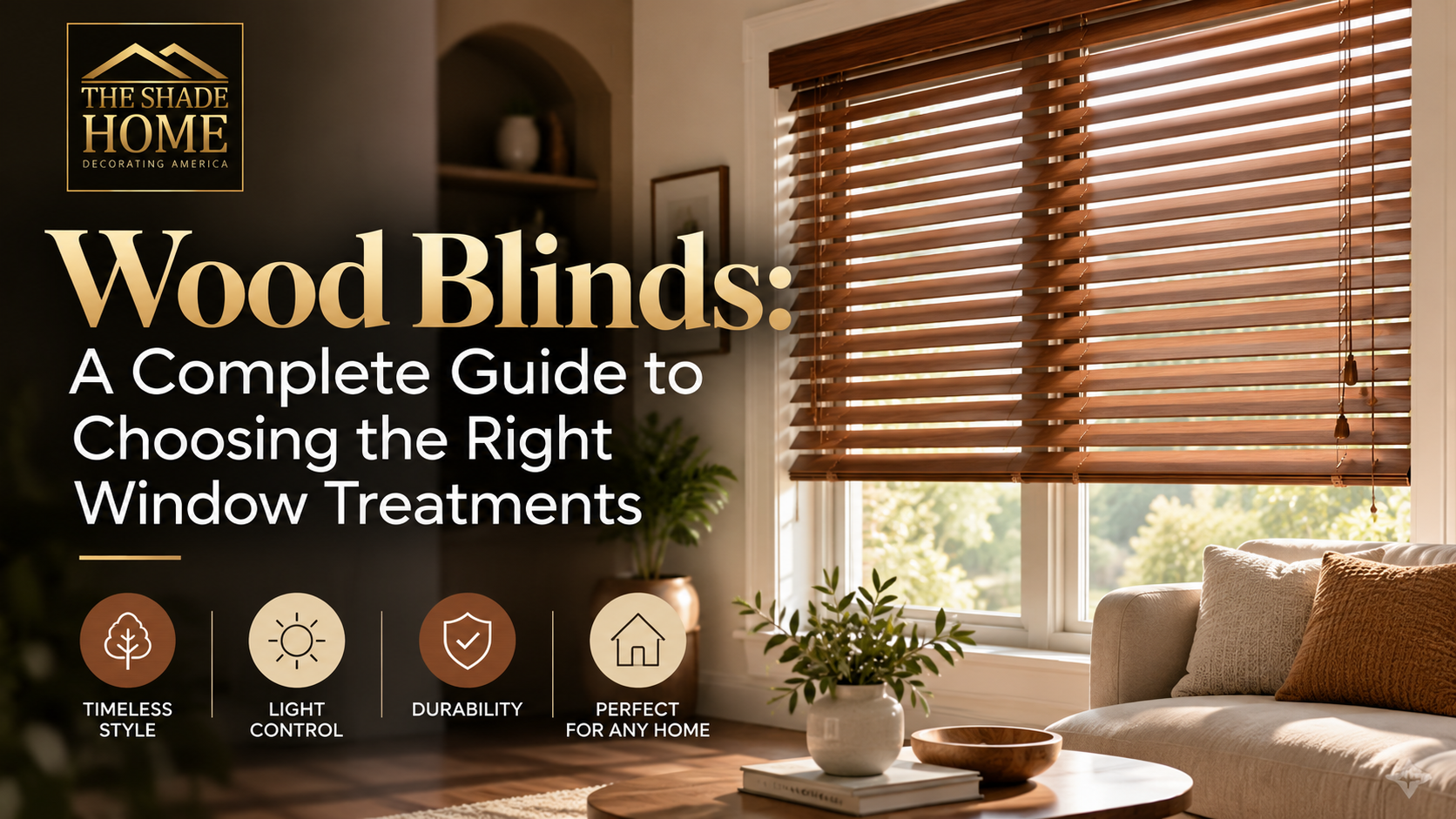
Natural wood has a timeless place in interior design, bringing warmth, texture and character to modern and traditional homes alike. Wood blinds combine that natural appeal with practical control over privacy, glare and natural light. From real wood grain and stained finishes to painted styles and custom configurations, they can be adapted to different rooms and design preferences.
Choosing the right option involves more than selecting a colour. Window dimensions, slat size, room conditions, operating method, maintenance and the amount of light you want to control all matter.
Whether you are furnishing a new home, updating a bedroom or looking for sophisticated window treatments for large windows, understanding the available options makes the decision easier.
What Are Wood Blinds?
Quick Answer: Wood blinds are window coverings made with horizontal wood slats that can be tilted to adjust incoming light, glare and privacy. The slats can also be raised or lowered depending on the design. Available in different wood finishes, colours and sizes, they offer a combination of natural texture and adjustable functionality.
Wood blinds are designed around horizontal slats connected by a control mechanism. Tilting the slats changes the angle of incoming sunlight while maintaining varying levels of outside visibility and privacy.
For homeowners who prefer a streamlined appearance, cordless window blinds can also provide a cleaner operating style by removing traditional hanging cords.
The visual character of wood comes from its grain, colour and finish. Depending on the manufacturer, options may include natural stains, painted finishes and different slat profiles.
What Are the Benefits of Wood Blinds?
Wood blinds can add natural warmth while providing adjustable light and privacy control. Their range of colours, stains, slat sizes and finishes allows them to complement traditional, transitional and contemporary interiors. They can also be customised for different window dimensions and design requirements.
Natural and Timeless Appearance
The natural grain of wood gives these blinds a textured appearance that can make a room feel warmer and more connected to natural materials.
Adjustable Light Control
Tilting the slats allows homeowners to control how much natural light enters a room. The angle can be adjusted throughout the day depending on glare and brightness.
Privacy Control
Closed slats can limit visibility from outside, while partially open slats can allow daylight into the room without completely opening the window treatment.
Design Versatility
Wood blinds are available in different stains, painted colours and slat sizes. This makes them suitable for neutral interiors, traditional décor, contemporary spaces and more layered design schemes.
For homeowners planning a complete room update, Living room window treatments can help provide additional inspiration for combining window coverings with furniture, finishes and décor.
What Types of Wood Blinds Are Available?
Wood blinds are available in several styles based on material, finish, construction and slat size. Real wood options highlight natural grain, while painted and stained finishes create different visual effects. Custom configurations can also accommodate unusual window dimensions, while wider slats create a more open, contemporary appearance.
| Type | Key Features | Suitable For |
| Real Wood Blinds | Natural wood grain and authentic appearance | Living rooms, bedrooms |
| Painted Wood Blinds | Smooth painted finish | Modern interiors |
| Stained Wood Blinds | Highlights natural grain | Traditional interiors |
| Custom Wood Blinds | Made according to window requirements | Unique or custom windows |
| Wide-Slat Wood Blinds | Larger slats and clean appearance | Large windows |
Available materials, colours, finishes and construction methods can vary by manufacturer. This is why homeowners should review the exact specifications before selecting a product.
For unusual window dimensions or a highly specific interior concept, Custom blinds can be considered as part of a broader custom window-treatment approach.
How Do Wood Blinds Compare With Other Window Treatments?
Wood blinds provide adjustable slats, natural texture and direct control over light and privacy. Roller blinds, Roman shades and cellular shades use different constructions and therefore create different visual and functional effects. The right choice depends on the room, desired appearance, light requirements and operating preferences.
| Feature | Wood Blinds | Roller Blinds | Roman Shades | Cellular Shades |
| Appearance | Natural, textured | Clean and streamlined | Soft and layered | Minimal and structured |
| Light Control | Adjustable slats | Fabric-based | Fabric-based | Diffused or filtered |
| Privacy | Adjustable | Depends on fabric | Depends on fabric | Depends on fabric |
| Texture | Natural wood grain | Fabric/material | Fabric | Pleated material |
| Style | Traditional to modern | Modern and versatile | Classic and elegant | Contemporary |
| Adjustable Slats | Yes | No | No | No |
If you are comparing wood blinds with fabric-based options, Roller Blinds are another option worth considering for a simpler, streamlined window appearance.
What Slat Size Should You Choose for Wood Blinds?
Slat size affects the overall appearance of wood blinds as well as light control, outside visibility and the perceived proportions of a window. Narrower slats can create a more detailed appearance, while wider slats generally create a cleaner, more open look. Window size and interior style should guide the selection.
Common considerations include:
- Narrow slats: Can create a more detailed and traditional appearance.
- Medium slats: Offer a balanced look for many standard windows.
- Wide slats: Can provide a clean, contemporary appearance and may suit larger windows.
Slat size can also influence cleaning because larger surfaces may have fewer individual slats to wipe. However, the most appropriate size depends on the specific product and window.
For a more detailed guide to choosing the right proportions, explore blind slat size before finalising your selection.
Are Wood Blinds Suitable for Every Room?
Wood blinds can work well in many living spaces, bedrooms, dining areas and home offices. However, natural wood requires greater consideration in rooms exposed to frequent moisture or humidity. Kitchens and bathrooms may need alternative materials or products specifically designed for those environmental conditions.
| Room | Suitability | Main Consideration |
| Living Room | Excellent | Style and light control |
| Bedroom | Excellent | Privacy and light |
| Dining Room | Excellent | Finish and décor |
| Home Office | Excellent | Glare control |
| Kitchen | Conditional | Heat and moisture |
| Bathroom | Limited | Humidity and moisture |
Bedrooms are particularly suitable because wood blinds can provide privacy and adjustable light control. If you are furnishing a sleeping space, Bedroom blinds can provide further ideas for selecting suitable window treatments.
In kitchens and bathrooms, consider the level of moisture exposure carefully. Natural wood is generally less suitable for consistently humid environments, so product specifications and manufacturer recommendations should be checked.
Are Wood Blinds Good for Large Windows?
Wood blinds can be used for large windows when the product is correctly sized and configured. Window dimensions, blind weight, slat size, mounting requirements and operating method all need to be considered. Larger openings may also benefit from multiple blind sections rather than relying on one oversized unit.
For larger windows, homeowners should consider:
- Overall window width and height
- Weight of the selected blind
- Appropriate slat size
- Mounting requirements
- Multiple blind configurations
- Manual versus motorized operation
- Custom sizing requirements
Large windows can present different installation and operating considerations than standard windows. A professional assessment can help determine the most appropriate configuration.
For more ideas about treating oversized openings, see large window blinds.
Can Wood Blinds Be Motorized?
Motorized wood blinds can provide convenient operation, particularly for hard-to-reach windows or larger installations. Depending on the product and system selected, motorization can allow blinds to be operated using a remote, wall control or compatible smart-home technology. Compatibility varies, so product specifications should be confirmed before purchase.
Motorization can be useful for:
- Hard-to-reach windows
- Multiple windows requiring coordinated operation
- Accessibility needs
- Large window installations
- Smart-home setups where compatible
Motorized operation can also reduce the need to manually adjust blinds throughout the day. However, not every wood blind system offers the same motorization features.
Explore Motorized window blinds to understand more about automated window-treatment options.
How to Choose the Right Wood Blinds for Your Home?
Choosing wood blinds involves balancing window dimensions, room conditions, interior style, privacy needs, natural light and operating preferences. Start with accurate window measurements, then consider wood colour, finish and slat size. Finally, evaluate whether manual, cordless or motorized operation is more appropriate for the room.
1. Consider Window Size
Measure the width and height accurately and consider whether the window requires a standard or customised configuration.
2. Match Your Interior Style
Choose between natural, stained or painted finishes depending on the furniture, flooring, walls and overall décor.
3. Select the Right Slat Size
Slat proportions can influence the visual balance of the window and the amount of outside visibility when the blinds are tilted.
4. Think About Privacy and Natural Light
Bedrooms may require stronger privacy control, while living rooms and offices may place greater emphasis on glare and daylight management.
5. Consider Room Conditions
Areas exposed to moisture require additional consideration. Always follow manufacturer recommendations for the specific material.
6. Choose the Operating Method
Manual, cordless and motorized systems offer different operating experiences. Consider accessibility, window height and convenience.
Customisation can be particularly useful when windows have unusual dimensions or when you want the window treatment to coordinate closely with the room. The Shade Home’s custom wood blinds approach can be considered when standard configurations do not meet the design or measurement requirements.
How Do You Clean and Maintain Wood Blinds?
Wood blinds should generally be maintained with regular dusting and gentle cleaning rather than excessive moisture. A soft microfiber cloth or suitable duster can remove everyday dust from the slats. Harsh chemicals, abrasive products and excessive water should be avoided unless specifically approved by the manufacturer.
A simple maintenance routine includes:
- Dust the slats regularly.
- Use a soft microfiber cloth for gentle cleaning.
- Avoid soaking the wood.
- Do not use harsh cleaning chemicals unless recommended.
- Follow the manufacturer’s care instructions.
Different finishes may have different cleaning requirements, so always check the product-care guidance.
For a broader maintenance guide, see how to clean blinds.
Can Wood Blinds Work With Modern Interior Design?
Wood blinds can complement modern interiors when their finish, colour and slat proportions are coordinated with the rest of the room. Natural textures can balance minimalist furniture, neutral colour palettes and contemporary architecture, while painted finishes can create a more uniform appearance.
They can work particularly well with:
- Minimalist interiors
- Neutral colour palettes
- Modern furniture
- Natural materials
- Contemporary architecture
- Layered luxury interiors
For modern spaces, consider coordinating the blind finish with flooring, cabinetry, furniture or other wood elements. A consistent material palette can create visual continuity without making every surface identical.
If you are looking for additional inspiration, designer window blinds can help you explore different approaches to combining style and functionality.
Wood Blinds vs Faux Wood Blinds
Wood blinds and faux wood blinds can both provide adjustable slats, privacy and light control, but they differ in material, appearance, weight and suitability for certain environments. Natural wood highlights authentic grain and texture, while faux wood options may offer different performance characteristics depending on their construction and finish.
| Feature | Wood Blinds | Faux Wood Blinds |
| Natural Wood Grain | Yes | Designed to replicate wood appearance |
| Appearance | Authentic wood texture | Wood-look finish |
| Moisture Resistance | Depends on wood and finish; moisture requires care | Varies by material and manufacturer |
| Weight | Varies by wood and construction | Varies by material and construction |
| Maintenance | Requires appropriate wood care | Depends on material and finish |
| Design Options | Various stains and painted finishes | Various colours and wood-look finishes |
Neither material should be selected solely on appearance. Room conditions, product specifications, budget, window size and maintenance requirements should all be considered.
Expert Recommendation: Choosing Wood Blinds for Your Home
At The Shade Home, we recommend selecting wood blinds by looking at the complete window rather than choosing based only on colour or price. Start with the window dimensions and room conditions, then consider the interior style, wood finish, slat size, privacy requirements and amount of natural light. Moisture exposure is particularly important because natural wood requires appropriate care in humid environments. Operating preferences should also be considered, especially for large, high or difficult-to-reach windows. Depending on the installation, manual, cordless or motorized operation may be suitable. A customised window-treatment solution can help coordinate measurements, finishes and functionality so the final result works with both the architecture and décor of your home.
Why Choose The Shade Home?
Choosing window treatments involves balancing design, functionality, measurements and installation. The Shade Home focuses on customised window-treatment solutions that can be tailored to different room styles, window sizes and operating preferences.
One client shared:
“Great experience with Shade Home. The price was lower than other competitors. Krish was very helpful and answered all our questions. The installation was done very effectively. Great job! Easy 5 stars!”
Read the full client review on Google
Frequently Asked Questions About Wood Blinds
1. Are wood blinds a good choice for windows?
Wood blinds can be a practical choice when you want natural texture, adjustable light control and privacy. They are available in different finishes and slat sizes, making them suitable for many interior styles. However, room conditions, window dimensions, moisture exposure and maintenance requirements should be considered before selecting them.
2. Are real wood blinds better than faux wood blinds?
Real wood blinds offer authentic wood grain and natural texture, while faux wood blinds are designed to replicate the appearance of wood using alternative materials. Their differences include weight, moisture characteristics, maintenance and available finishes. The appropriate choice depends on the room, design preferences, product specifications and environmental conditions.
3. Can wood blinds be used in bedrooms?
Yes, wood blinds can work well in bedrooms because their adjustable slats provide control over privacy and natural light. Different stains and painted finishes can also complement bedroom furniture and décor. For bedrooms that receive strong morning sunlight, slat positioning can help manage brightness and glare throughout the day.
4. Are wood blinds suitable for kitchens?
Wood blinds can be considered for kitchens, but moisture, steam and heat exposure should be evaluated carefully. Natural wood is generally less suitable for areas with frequent moisture exposure. Always check the manufacturer’s specifications and care recommendations before selecting wood blinds for a kitchen environment.
5. Are wood blinds good for large windows?
Wood blinds can be suitable for large windows when correctly measured and configured. Factors such as overall size, blind weight, slat dimensions, mounting and operation become increasingly important as window dimensions grow. Multiple blind sections or motorized operation may be considered depending on the installation and product specifications.
6. What slat size is best for wood blinds?
There is no single slat size that suits every window. Narrower slats can create a more detailed appearance, while wider slats can provide a cleaner, more contemporary look. Consider the window’s proportions, room style, desired light control and outside visibility when selecting the appropriate slat size.
7. How do you clean wood blinds?
Regular dusting with a soft cloth or suitable duster is generally appropriate for wood blinds. A microfiber cloth can be used for gentle cleaning when required. Avoid excessive moisture, abrasive materials and harsh chemicals unless specifically recommended. Always follow the manufacturer’s cleaning and maintenance instructions for the particular finish.
8. Can wood blinds be motorized?
Some wood blind systems can be motorized, depending on the manufacturer and product configuration. Motorization can make operation easier for large, high or hard-to-reach windows and may support compatible smart-home systems. Before choosing motorized blinds, confirm the available controls, power requirements and smart-home compatibility for the specific product.
Conclusion
Wood blinds bring together natural appearance, adjustable privacy, light control and design flexibility, making them a versatile option for many interiors. From real wood blinds with distinctive grain to painted and stained finishes, there are options for different décor styles and window requirements.
The right choice depends on your window size, room, moisture exposure, interior style, slat size and preferred operating method. Large windows may require customised configurations, while bedrooms and living spaces can benefit from adjustable light and privacy control.
At The Shade Home, custom window-treatment solutions can help you select finishes, configurations and operating options suited to your home. Explore the possibilities and choose wood blinds that complement both your windows and your overall interior design.
