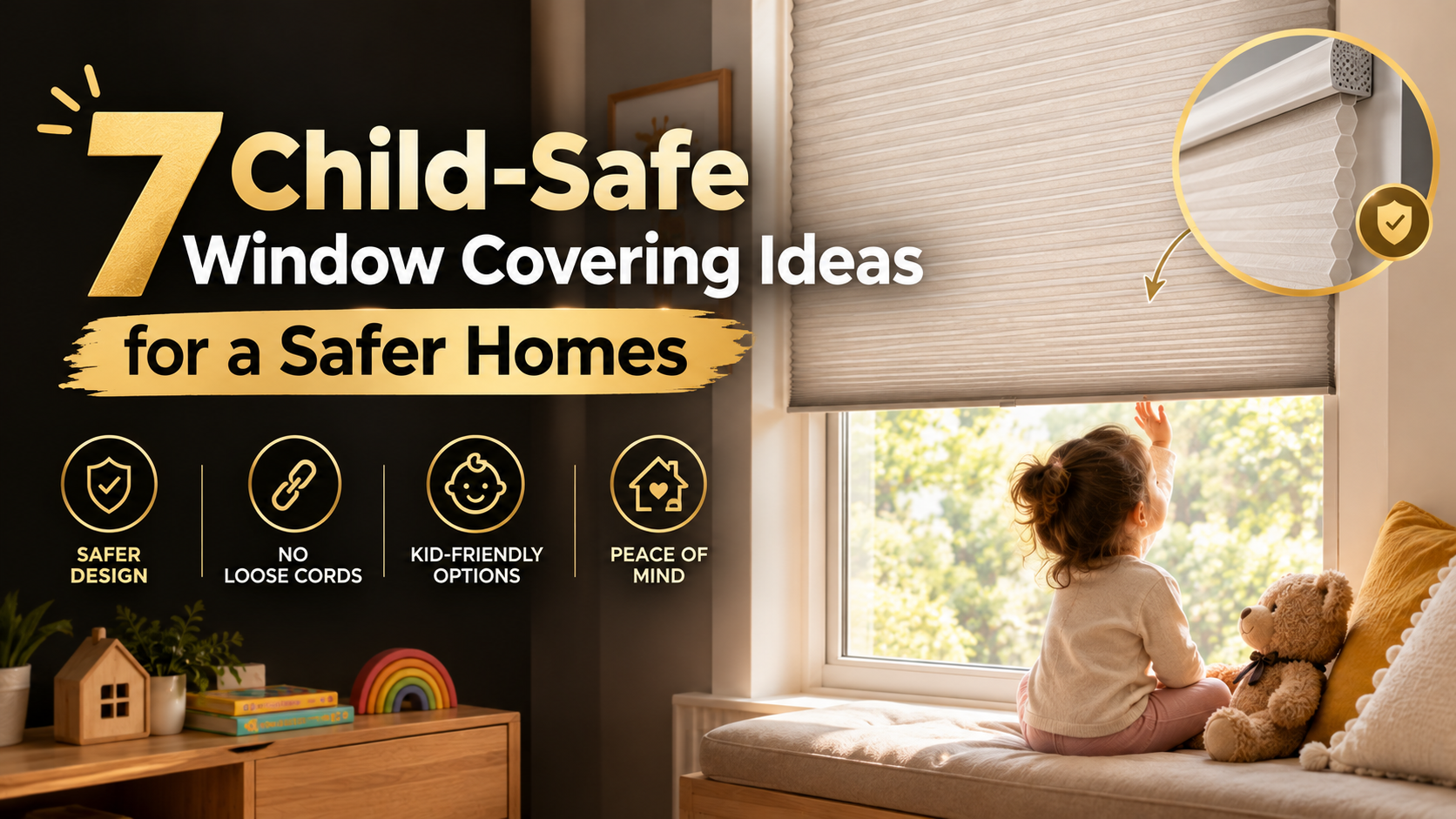
Child-Safe Window Coverings can help families balance privacy, natural light, comfort, and thoughtful design. While windows provide valuable daylight and ventilation, the window treatment and surrounding area also deserve attention when young children are present.
Accessible operating cords, nearby furniture, and improperly installed hardware can create potential safety concerns. Modern window treatments offer alternatives such as cordless and motorized systems that reduce accessible cords while maintaining convenient operation.
Whether you’re furnishing a nursery, updating a child’s bedroom, or renovating an entire family home, the right solution depends on the window, room, and operating needs. Professionally measured Custom blinds can provide a tailored fit for different window sizes and layouts.
What Are the Safest Window Coverings for Homes With Children?
The safest window coverings for homes with children are generally cordless or motorized systems that eliminate accessible operating cords. Cordless roller blinds, motorized shades, and similar child-safe window treatments can provide privacy and light control while creating a cleaner environment for families. No window covering should be considered completely risk-free.
Why Is Window Safety Important in Homes With Children?
Window safety involves more than choosing a particular blind or shade. Accessible operating cords, climbable furniture, loose hardware, and improper installation can all affect the safety of the area. Choosing an appropriate operating system and maintaining a clear space around the window can help families create a more thoughtful setup.
When evaluating a window treatment, consider:
- Whether operating cords are accessible
- How furniture is positioned around the window
- Whether mounting hardware is secure
- Whether the covering operates correctly
- Whether the product has been installed according to manufacturer instructions
Parents and caregivers should follow current manufacturer instructions and recognized window-covering safety guidance when selecting, installing, and maintaining products.
7 Child-Safe Window Covering Ideas
Modern window coverings offer several ways to reduce accessible cords without compromising style or functionality. The best option depends on the room, window size, desired light control, and family’s preferred method of operation.
1. Cordless Roller Blinds
Cordless roller blinds offer a straightforward solution for families who want to minimize accessible operating cords. They use a cordless mechanism for manual adjustment and maintain a clean, uncluttered appearance.
They can work well in nurseries, children’s bedrooms, living rooms, and play areas. Fabric choices can also provide either filtered daylight or stronger blackout performance.
Key advantages include:
- No hanging operating cord
- Simple manual operation
- Minimalist appearance
- Light-filtering and blackout options
- Flexible use across different rooms
Roller Blinds are worth considering when simplicity and a streamlined appearance are priorities.
2. Motorized Window Blinds
Motorized window blinds replace manual operation with remote or automated control. They are particularly useful for tall, wide, or difficult-to-reach windows and can make daily adjustments more convenient.
Depending on the system, features may include remote operation, scheduling, and smart-home integration. Motorized blinds for children can therefore be useful in busy family homes where convenience and reduced reliance on accessible cords are important.
For more information, explore Motorized window blinds as an option for automated window control.
3. Cordless Shades for Children’s Bedrooms
Bedrooms and nurseries often need both privacy and controlled light. Cordless shades provide a simple operating solution, while the choice of fabric determines how much daylight enters the room.
Light-filtering materials can soften daytime sunlight, whereas blackout fabrics can create a darker environment for sleep.
When selecting nursery window treatments or bedroom window treatments, consider:
- Desired light level
- Privacy requirements
- Fabric durability
- Ease of maintenance
- Cordless operation
Bedroom blinds can be selected around these requirements while still complementing the room’s overall design.
4. Smart Window Coverings
Smart window coverings add automation to motorized operation. Depending on the system, homeowners may control shades through a smartphone, remote, voice commands, or scheduled routines.
This can be particularly useful when multiple windows need to be adjusted throughout the day. Parents can also manage shades remotely without needing to manually reach individual windows.
Potential features include:
- Smartphone control
- Voice control
- Automated schedules
- Remote operation
- Compatible smart-home integration
Voice-controlled blinds, including systems marketed as Alexa smart blinds, may be suitable when the selected window treatments and home technology are compatible.
5. Child-Friendly Blackout Blinds
Blackout blinds are particularly useful in nurseries and children’s bedrooms where strong light control is desired. They can reduce incoming daylight and provide privacy while helping create a darker sleeping environment.
For a family-focused setup, consider pairing blackout fabric with a cordless or motorized operating system. This keeps the focus on both performance and practical operation.
When choosing child-safe shades, also consider the window’s location, furniture placement, fabric requirements, and the manufacturer’s instructions.
Blackout blinds are another option for spaces where minimizing incoming light is a priority.
6. Honeycomb Shades
Honeycomb shades, also called cellular shades, combine insulation with a clean, contemporary design. Their cellular construction creates air pockets that can help reduce heat transfer, making them useful for homes where energy efficiency and indoor comfort matter.
Depending on the fabric, they can also provide light filtering or stronger privacy. Cordless configurations make them suitable for child-friendly window treatments in bedrooms and other family spaces.
Benefits include:
- Insulating cellular construction
- Light-filtering options
- Privacy control
- Cordless operating choices
- Contemporary appearance
Homeowners interested in this style can explore window honeycomb blinds for additional design and configuration options.
7. Professionally Installed Custom Window Coverings
The quality of installation is an important part of any window-treatment plan. Accurate measurements, suitable mounting, and correct operation can help ensure that the selected product performs as intended.
Professional installation can provide:
- Precise measurements
- Correct mounting
- Better product fit
- Guidance on operating systems
- A cleaner finished appearance
- Recommendations for different window configurations
Custom window coverings can be especially useful when a home includes specialty windows, multiple rooms, or unusual dimensions.
For a more design-focused approach, designer window blinds can also be incorporated into a cohesive interior scheme.
Cordless vs. Motorized Window Coverings
Both options can reduce reliance on accessible operating cords, but they offer different levels of convenience. Cordless systems are straightforward and manually operated, while motorized treatments provide remote control and, where supported, automation.
| Feature | Cordless Window Coverings | Motorized Window Coverings |
| Operating Method | Manual | Remote/automated |
| Accessible Cords | Minimized | Eliminated from manual operation |
| Smart Home | Limited | Excellent |
| Automation | No | Yes |
| Cost | Generally lower | Generally higher |
| Best For | Simple everyday use | Convenience and automation |
Features vary between products, so check the manufacturer’s specifications before making a selection.
How to Make Your Entire Window Area Safer
A child-conscious window setup considers the surrounding environment as well as the covering itself. Furniture placement, secure installation, appropriate operating systems, and routine checks all contribute to a more considered approach to window safety.
Keep Furniture Away From Windows
Where practical, avoid placing cribs, beds, chairs, sofas, or other climbable furniture directly beside accessible window coverings.
Choose Appropriate Operating Systems
Cordless and motorized options can reduce reliance on accessible operating cords. Select the system that best suits the child’s age, window location, and household needs.
Check Hardware Regularly
Periodically inspect mounting components, operating mechanisms, and the covering itself for visible damage or changes in performance.
Follow Product Instructions
Installation, operation, cleaning, and maintenance requirements vary. Always follow the manufacturer’s instructions for the specific window covering.
Best Child-Safe Window Coverings by Room
Different rooms have different requirements. Rather than choosing one product throughout the home, consider the balance of light, privacy, convenience, and design needed in each space.
| Room | Recommended Window Covering | Main Benefit |
| Nursery | Cordless Blackout Shades | Light control |
| Child’s Bedroom | Cordless Roller Blinds | Simple operation |
| Playroom | Motorized Shades | Convenient control |
| Living Room | Cordless Roller Blinds | Style + privacy |
| Family Room | Motorized Shades | Smart-home integration |
| Home Office | Solar/Cordless Shades | Glare reduction |
Expert Recommendation from The Shade Home
The Shade Home recommends choosing window coverings according to the child’s age, room function, and window configuration. Cordless and motorized systems can reduce accessible cords, while professional measuring and installation help ensure proper fit and operation. Families should also consider furniture placement and follow all manufacturer guidance for their chosen products.
Are Motorized Blinds Worth It for Families?
Motorized blinds can be a worthwhile choice for families with tall, wide, or difficult-to-reach windows. They offer convenient control without requiring manual adjustment and may support remote operation, scheduling, and smart-home routines.
They can be particularly useful when several shades need to be adjusted together. Instead of treating motorization as a requirement for every room, consider it where accessibility and convenience provide clear value.
As with any window treatment, families should follow the manufacturer’s installation and operating guidance and consider the surrounding window area as part of the overall setup.
Why Choose The Shade Home for Child-Safe Window Treatments?
The Shade Home combines custom sizing, professional installation, premium materials, and modern operating systems to create window treatments tailored to individual homes.
Families can choose from:
- Custom measurements
- Professional consultation
- Cordless options
- Motorized systems
- Premium fabrics
- Blackout and light-filtering materials
- Smart-home integration
- Professional installation
- Personalized design guidance
- Warranty and support
This approach allows practical requirements to be considered alongside the home’s overall aesthetic. For additional inspiration, explore window shades interior ideas for ways to integrate functional treatments into a cohesive design.
Common Mistakes to Avoid When Choosing Child-Safe Window Coverings
Choosing a window treatment based only on appearance can mean overlooking practical considerations. Before purchasing, evaluate the operating mechanism, measurements, installation requirements, fabric, and surrounding furniture.
Common mistakes include:
- Ignoring accessible operating cords
- Choosing the wrong size
- Overlooking installation requirements
- Placing climbable furniture beside windows
- Selecting unsuitable fabrics
- Forgetting blackout requirements in sleeping spaces
- Failing to inspect older window coverings
A balanced approach considers both how the treatment looks and how it will function in everyday family life.
Maintenance Tips for Child-Safe Window Coverings
Regular maintenance helps keep blinds and shades functioning properly. Periodically inspect the fabric, mounting hardware, and operating mechanism, and clean each product according to its manufacturer’s recommendations.
Simple maintenance includes:
- Dusting regularly
- Cleaning fabrics as instructed
- Checking mounting hardware
- Inspecting operating mechanisms
- Addressing visible damage
- Following product-specific maintenance guidance
For more detailed cleaning advice, see our guide on how to clean blinds.
Conclusion
Child-Safe Window Coverings can help families balance privacy, natural light, convenience, and interior style. Cordless roller blinds, motorized systems, blackout shades, and honeycomb shades each offer different advantages depending on the room and window.
The overall setup matters just as much as the product. Furniture placement, accurate measurements, appropriate installation, regular inspection, and manufacturer guidance should all be part of the decision-making process.
If you’re planning a nursery, children’s bedroom, playroom, or whole-home renovation, The Shade Home can help you select window treatments suited to your space and lifestyle. Contact The Shade Home for a personalized consultation and explore custom solutions designed around your family’s needs.
FAQs
1. What are the safest window coverings for children?
Cordless and motorized window coverings are generally preferred for homes with young children because they can minimize or eliminate accessible operating cords. Options such as cordless roller blinds and motorized shades can provide light and privacy control. Proper installation, furniture placement, regular inspection, and manufacturer guidance also matter.
2. Are cordless blinds safer for children?
Cordless blinds can reduce potential hazards associated with accessible operating cords because they do not use a hanging cord for everyday operation. However, the entire window area should be considered. Correct installation, suitable furniture placement, and following the manufacturer’s instructions remain important parts of a child-conscious setup.
3. Are motorized blinds safe for kids?
Motorized blinds can reduce reliance on manual operating cords and offer convenient remote or automated control. Their suitability depends on the specific product, installation, and surrounding environment. Families should review manufacturer guidance, maintain the system properly, and consider furniture placement as part of their overall window-safety approach.
4. What blinds are best for a child’s bedroom?
Cordless roller blinds, blackout shades, and honeycomb shades can all work well in children’s bedrooms. The best choice depends on the desired light level, privacy, window size, and décor. Blackout fabrics can be useful for sleeping spaces, while cordless operation can minimize accessible operating cords.
5. Are blackout blinds suitable for nurseries?
Yes. Blackout blinds can be suitable for nurseries because they provide strong light control and privacy. Families may wish to pair blackout fabric with a cordless or motorized operating system to minimize accessible cords. Always install and operate the product according to the manufacturer’s instructions.
6. How can I make existing blinds safer for children?
Start by checking the operating system, hardware, and furniture around the window. Where appropriate, consider upgrading to cordless or motorized alternatives. Keep climbable furniture away from windows, inspect existing treatments for damage, and follow the manufacturer’s guidance for any adjustments, repairs, or replacements.
7. Are cordless blinds more expensive?
Pricing varies based on the blind’s size, fabric, construction, and operating mechanism. Cordless options may differ in price depending on the product, but they can be a practical choice for families seeking a clean operating system. A professional consultation can help identify suitable options within the available budget.
8. Can smart blinds improve window safety?
Smart blinds can support a safety-conscious window-treatment plan by reducing the need for accessible manual cords. They can also provide remote control, scheduling, and automation. However, smart functionality does not replace proper installation, furniture placement, inspection, or adherence to the manufacturer’s safety and operating instructions.
