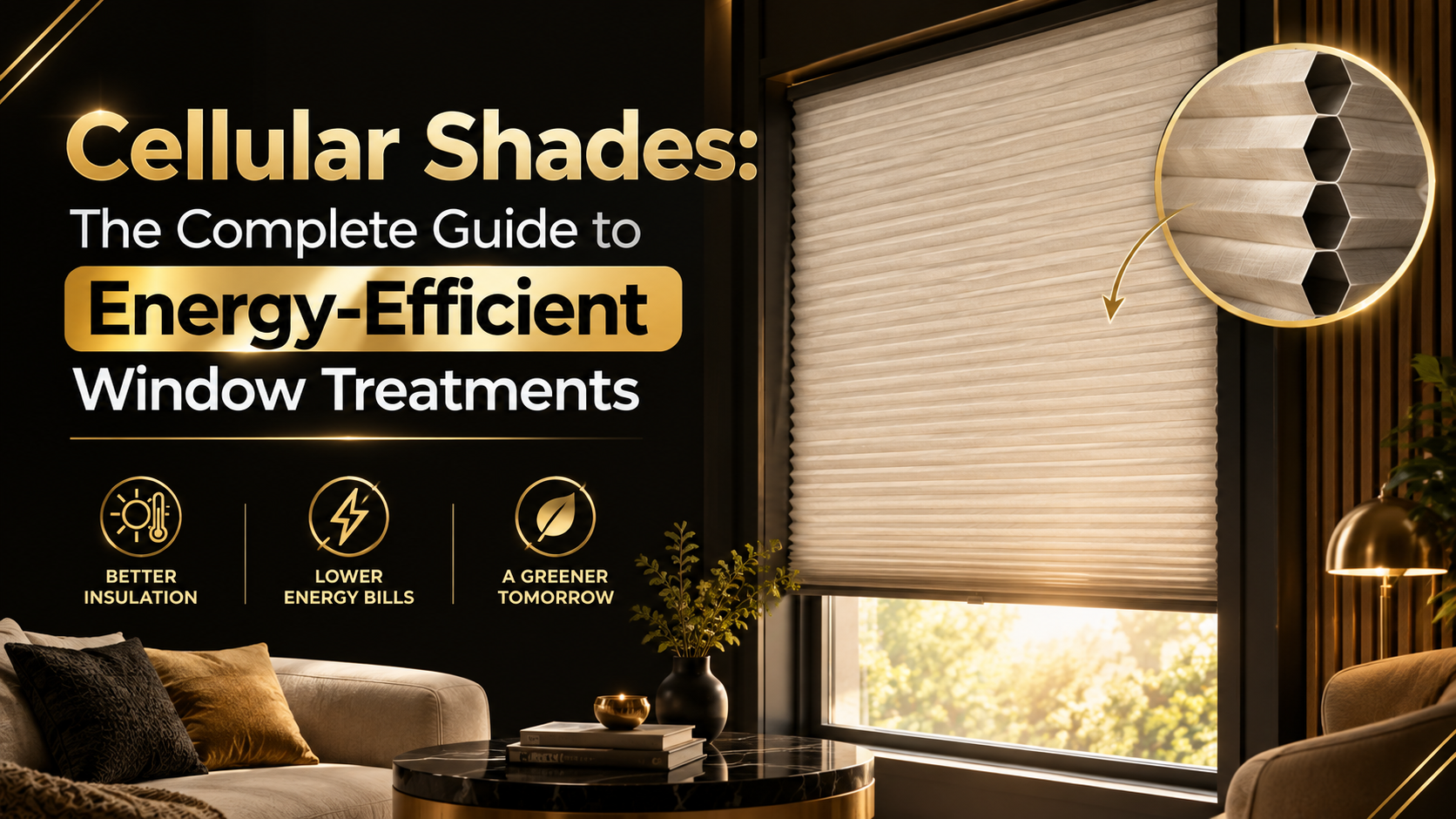
Cellular Shades combine clean, modern design with practical window performance. Their distinctive honeycomb construction creates air pockets that can help reduce heat transfer while giving homeowners control over natural light and privacy.
Available in light-filtering, room-darkening, and blackout fabrics, cellular window shades can be tailored to different rooms and lifestyles. They work especially well in contemporary interiors where homeowners want a streamlined alternative to traditional blinds without compromising comfort.
From bedrooms and living rooms to home offices and large windows, the right cellular shade can balance appearance, insulation, and everyday usability. For unusually sized windows, Custom blinds can provide a more precise fit and cohesive finish.
What are Cellular Shades?
These shades, also known as honeycomb shades, are fabric window coverings with a folded-cell structure that traps air between the window and room. This construction provides an insulating layer while helping manage light and privacy. They come in different cell configurations, fabrics, and opacity levels to suit various spaces.
What Are Cellular Shades and How Do They Work?
These shades are made from folded fabric that forms connected honeycomb-shaped cells. The trapped air creates a layer between the glass and interior, helping limit heat transfer while the fabric manages incoming light and visibility.
Two common constructions are:
- Single-cell shades: A streamlined option with one layer of cells.
- Double-cell shades: Multiple cell layers that provide additional insulation where temperature management is a higher priority.
The design also makes cellular shades suitable for a variety of window sizes. For a more tailored solution, window honeycomb blinds can be customised around specific dimensions and design requirements.
What Are the Benefits of Cellular Shades?
Cellular Shades offer a strong combination of comfort, light management, privacy, and contemporary style. Their honeycomb construction provides insulation, while fabric and opacity choices allow homeowners to adapt the treatment to the needs of each room.
1. Improved Energy Efficiency
The air pockets within cellular shades create an additional insulating barrier at the window. By helping reduce heat transfer, they can contribute to a more comfortable interior and support energy-conscious home design.
2. Better Temperature Control
Windows can allow unwanted heat gain in summer and heat loss in colder weather. They add another layer between the glass and room, helping moderate these temperature fluctuations.
3. Flexible Light Control
Choose light-filtering fabrics when you want soft, diffused daylight or stronger room-darkening and blackout fabrics when minimizing incoming light is more important.
4. Enhanced Privacy
Opacity plays a major role in privacy. Light-filtering materials can limit visibility while allowing daylight through, while blackout fabrics provide a higher level of visual privacy.
5. Clean Modern Appearance
The structured folds create a subtle, uncluttered look that works particularly well with minimalist interiors, contemporary architecture, and modern home décor.
6. Versatile Design
Cellular blinds are available in different colours, fabrics, cell configurations, and opacity levels. This flexibility makes them useful as energy-efficient window shades without sacrificing the visual character of the room.
Light-Filtering vs Blackout Cellular Shades: Which Is Better?
The best option depends on how you use the room. Light-filtering cellular shades soften sunlight and maintain a brighter atmosphere, while blackout versions provide much stronger control over incoming light. Both can provide privacy, but their performance differs according to the fabric selected.
| Feature | Light-Filtering Cellular Shades | Blackout Cellular Shades |
| Natural Light | Softly diffuses light | Blocks most incoming light |
| Privacy | Excellent | Excellent |
| Bedrooms | Good | Excellent |
| Living Rooms | Excellent | Good |
| Media Rooms | Good | Excellent |
| Daytime Glare | Reduced | Significantly reduced |
Light-filtering shades suit living spaces where daylight is desirable. Blackout designs are better for bedrooms and media rooms where darkness is a priority.
Homeowners seeking another strong light-control option can also consider blackout blinds.
Where Are Cellular Shades Best Used?
These Shades can be adapted to different rooms by changing the fabric, opacity, and operating style. This makes them suitable for spaces ranging from bright living areas to private bedrooms and hard-to-reach windows.
| Room | Recommended Cellular Shade |
| Living Room | Light-filtering cellular shades |
| Bedroom | Blackout cellular shades |
| Nursery | Room-darkening cellular shades |
| Home Office | Light-filtering shades |
| Media Room | Blackout shades |
| Large Windows | Wide-format cellular shades |
| Kitchen | Easy-care light-filtering shades |
For sleeping spaces, Bedroom blinds can provide additional ideas for privacy and light management. Home offices generally benefit from filtered daylight that reduces glare while maintaining a productive atmosphere.
Large openings may require carefully planned large window blinds, particularly when multiple shades need to align visually.
Expert Recommendation from The Shade Home
The Shade Home recommends choosing shades according to the room’s function and the window’s practical requirements.
- Living rooms: Light-filtering fabrics for comfortable daylight.
- Bedrooms and media rooms: Blackout fabrics for stronger light control.
- High-insulation requirements: Double-cell construction.
- Tall or hard-to-reach windows: Motorized operation.
- Unusual dimensions: Custom sizing for a precise fit.
Rather than choosing one specification for every room, consider each window individually to achieve the right balance of design and performance.
Cellular Shades vs Other Window Treatments
They are particularly strong when insulation is a priority, but alternative window treatments may suit different aesthetic or functional preferences. Comparing their key characteristics makes it easier to identify the right solution for each space.
| Window Treatment | Best For | Insulation | Light Control | Style |
| Cellular Shades | Energy efficiency | ★★★★★ | ★★★★★ | Modern |
| Roller Blinds | Minimalist interiors | ★★★☆☆ | ★★★★☆ | Modern |
| Roman blinds and shades | Luxury interiors | ★★★☆☆ | ★★★★☆ | Classic |
| Zebra Blinds | Flexible light control | ★★★☆☆ | ★★★★★ | Contemporary |
| Plantation Shutters | Durability & privacy | ★★★★☆ | ★★★★★ | Timeless |
These shades are a strong choice when comfort and insulation are central concerns. Roller blinds offer a particularly streamlined appearance, while Roman shades bring a softer, more decorative quality.
How to Choose the Right Cellular Shades for Your Home
Selecting shades involves more than matching a colour to your décor. Consider window dimensions, room function, opacity, privacy, insulation needs, fabric, maintenance, and operation before making a decision.
Window dimensions
Accurate measurements are especially important for large or specialty windows.
Single vs double cell
Choose double-cell construction when insulation is a major consideration.
Light filtering vs blackout
Match opacity to the room. Living areas often benefit from filtered daylight, while bedrooms may require stronger light control.
Fabric and colour
Choose a finish that complements your existing interior design rather than competing with it.
Privacy and energy efficiency
Street-facing windows may need higher-opacity fabrics, while rooms exposed to significant heat or cold can benefit from insulating construction.
Operation and maintenance
Consider cordless operation for a cleaner appearance and motorization where manual adjustment is inconvenient.
For homeowners who want more visual depth and texture, Textured Window Blinds offer another design direction.
Are Motorized Cellular Shades Worth It?
Motorized Cellular Shades are particularly useful for tall, wide, or difficult-to-reach windows. They make daily adjustments easier and, depending on the system, can support remote control, scheduling, and smart-home routines.
Automation is especially practical when several windows need to be adjusted together. It can also reduce the need to manually operate shades positioned in hard-to-access areas.
For a broader look at automated options, explore Motorized window blinds. Cellular shades can also be considered as part of voice-controlled smart-home setups such as Alexa smart blinds, depending on system compatibility.
The right setup should be selected according to the home’s existing technology, window configuration, and preferred control method.
Cellular Shades for Large Windows and Specialty Windows
Large and specialty windows often require more careful planning than standard openings. Custom Cellular Shades can help maintain consistent proportions and appearance, while appropriate operating systems make oversized treatments easier to use.
For wide or tall windows, accurate measurements are essential. Motorization may also be worthwhile when shades are positioned beyond comfortable reach.
If you are comparing options specifically for oversized openings, large window blinds provide additional considerations around sizing and design.
Custom solutions can be especially useful for architects, interior designers, renovators, and homeowners working with distinctive window configurations.
Why Choose The Shade Home for Cellular Shades?
The Shade Home takes a tailored approach to window treatments, helping homeowners match the right combination of fabric, opacity, size, and operation to their space.
The service can include custom sizing, premium fabrics, professional consultation, installation, design guidance, and smart-home integration. This allows the window treatment to be considered as part of the overall interior rather than as an afterthought.
For homeowners seeking inspiration for more decorative applications, designer window blinds can help explore ways to make window treatments an intentional part of the room’s design.
Conclusion
Cellular Shades provide a versatile combination of energy efficiency, privacy, light control, comfort, and contemporary style. Their honeycomb construction supports insulation, while different fabrics and opacity levels allow the shades to be tailored to individual rooms.
The best choice depends on the window, décor, privacy requirements, desired light level, and operating preferences. Light-filtering fabrics work well where daylight is welcome, while blackout options suit bedrooms and media spaces.
If you’re considering cellular window shades for your home or project, The Shade Home can help you select a solution based on your specific windows and requirements. Contact The Shade Home for a consultation and custom window-treatment recommendation.
FAQs
What are Cellular Shades?
Cellular Shades are fabric window coverings built with a honeycomb-style structure that creates air pockets within the shade. These pockets provide an insulating layer, while the fabric controls incoming light and privacy. Cellular shades are available in different cell constructions, colours, and opacity levels, including light-filtering and blackout options.
Are Cellular Shades energy efficient?
Cellular Shades can support energy efficiency by creating an insulating layer between the window glass and interior. Their effectiveness depends on factors such as cell construction, fabric, window type, and installation. Double-cell designs can provide additional insulation when temperature management is a key consideration.
Are Cellular Shades good for bedrooms?
Yes. They work well in bedrooms because they offer flexible privacy and light control. Blackout and room-darkening fabrics can significantly reduce incoming light, making them suitable for sleeping spaces. Their insulating construction can also contribute to a more comfortable room throughout changing outdoor temperatures.
What is the difference between Cellular Shades and Honeycomb Shades?
Cellular Shades and Honeycomb Shades are generally interchangeable terms for window shades featuring a cellular construction. Both describe folded fabric that forms air-filled cells. The terminology may vary between manufacturers and retailers, but the basic design and insulating principle are the same.
Do Cellular Shades provide privacy?
Yes. These shades can provide strong privacy when the appropriate fabric opacity is selected. Light-filtering fabrics reduce visibility while allowing daylight through, while room-darkening and blackout options offer greater privacy. For bedrooms and street-facing windows, higher-opacity fabrics are generally the more suitable choice.
Can Cellular Shades block sunlight?
Yes, depending on the fabric. Light-filtering shades soften and diffuse sunlight, while room-darkening and blackout versions provide stronger light reduction. Blackout cellular shades are particularly suitable for bedrooms, media rooms, and other areas where minimizing incoming daylight is important.
Are Cellular Shades suitable for large windows?
Yes. These shades can be designed for large windows when accurate measurements and appropriate configurations are used. Custom sizing helps create a consistent fit, while motorization can make wide, tall, or hard-to-reach shades easier to operate.
Can Cellular Shades be motorized?
Yes. These shades can be paired with motorized operating systems, depending on the chosen configuration. Motorization can provide convenient control and, with compatible technology, may support remote operation, scheduling, or smart-home routines. It is particularly useful for windows that are difficult to reach manually.
